BMW M4 (F82, 2014-2020) – engine, gearbox and technical highlights
The 3-litre, twin-turbocharged straight-six develops 424bhp, but the real drama comes from the torque, which peaks at 406lb ft from just 1850rpm

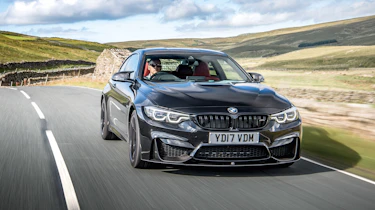
Codenamed the S55, the 3-litre twin-turbocharged straight-six found in the F82 M4 puts out 424bhp, just a 10bhp increase over its predecessor, the E92. The big jump for the turbo’d motor over the old naturally aspirated V8 is in torque, however, which is up from 295lb ft at a peaky 3900rpm to a mighty 406lb ft from just 1850rpm.
Equipped with Competition Package, the M4’s power increases by 20bhp to 444bhp but peak torque stays the same. The extra power doesn’t dramatically change the attitude of the engine and, as the standard car’s performance is so strong, you don’t really feel the effect either. The Competition Package includes changes to the chassis too, and that’s where real improvements can be felt. The CS, meanwhile, is further enhanced with lightweight parts, standard-fit (at the time) Michelin Cup 2 tyres, reprogrammed steering and tweaked damping. The motor peaks at a healthier 454bhp and 442lb ft, too.
The M4 GTS’s engine is fundamentally the same as the standard M4’s, however, it makes 493bhp from its 2979cc straight-six thanks to the help of a water injection. The system alone doesn’t add horsepower, what it does is spray atomized water into the inlet to cool the gases and therefore allow even higher boost pressures which does increase power. The standard car’s water-to-air intercooler allows for a boost of 2.2bar, whereas the water injection allows the GTS’s boost to increase to 2.5bar. There’s adjustable KW coilover suspension, a lightweight body and bolt-on aero parts to harness that power.
The M4 could be had with three pedals, but the DCT ‘box is very effective, both in manual and auto mode. It can be a little clunky when left to its own devices, particularly when cold, but shifts are generally smooth and quick. In manual mode they bang in with a real intensity, responding immediately to clicks of the steering wheel-mounted paddles. Sometimes it verges on being too aggressive, as when a new gear hits home, the torque delivery can upset the rear axle and cause the tyres to break traction.