End of the Tesla Cybertruck - production to stop after less than four years
This century’s most controversial passenger car is dying a premature death
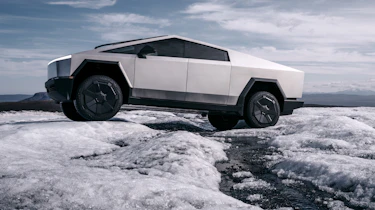
Tesla Cybertruck production will end in 2027, with the pick-up spending less than four years on sale. Company CEO Elon Musk confirmed production would ‘wind down’ next year at the Texas Gigafactory, to make room for increased Cybercab production.
It’s fair to say that what was the most controversial car of this century so far (or is that the Ferrari Luce?) has failed to deliver in terms of sales, certainly by comparison to initial projections and what the huge hype would have suggested. Current sales estimates are at around 63,000 units, with reports that Musk’s Space X and xAI companies made bulk fleet purchases in an attempt to make a dent in the glut of unsold stock.
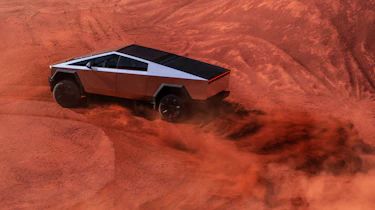
Following the announcement of production commencing in October 2023, Elon Musk used an earnings call to 'temper expectations', stating that the Cybertruck would be 'incredibly difficult to bring to market to reach volume’. So it has come to pass, with Musk’s target output at the time of 250,000 units per year by 2025 proving to have been a pipe dream.
The Cybertruck represented an extraordinary investment for Tesla, costing in the region of $5.6billion to realise as a production car. It’s thought some $3.6billion went into development of the battery alone, though there is some solace in this being an investment that’s transferable to other models. What is incredibly expensive and unique to the Cybertruck, is how its body and chassis were made. The laser-cut, cold-rolled stainless steel panels required development of a special ‘air bending’ process for shaping the metal.
There were genuinely useful innovations on the Cybertruck, though. It uses steer-by-wire technology, a first for a production car at the time that’s now being adopted in other models across the car industry. It featured a 48-volt low-voltage electrical architecture, saving weight by replacing the arguably massively antiquated 12-volt industry standard that’s been unmoving for 70 years. Read on for a full technical breakdown of the Cybertruck:
Tesla Cybertruck in detail
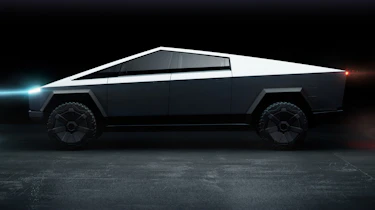
The Tesla Cybertruck promised ‘better utility than a truck, with more performance than a sports car’. While its radical, angular appearance isn’t for some, the production car remained true to the concept’s design first shown in 2019. Built on an aluminium monocoque, the Cybertruck utilises body panels made from stainless steel developed specifically for this use case, ensuring optimum corrosion and stain resistance. Its unique construction also gives it ‘better torsional rigidity than a McLaren P1,’ according to Elon Musk, with those body panels even capable of shrugging off bullets of up to 0.45 calibre.
Single-motor, all-wheel drive and Cyberbeast variants made up the range, each using an 800V architecture (the first Tesla to do so). The rear-drive model is good for 250 miles on a charge and 6.5sec from 0-60mph. Move up to the middle of the range and you get a motor mounted on each axle for all-wheel drive, sending 600bhp to the ground for a 4.1sec 0-60mph time – estimated range is also up to 340 miles.
At the top of the range, the Cyberbeast receives an 845bhp triple-motor setup with a single motor on the front axle and a new induction-based dual-motor assembly at the rear. A byproduct of this is a 20-mile range reduction and a 109kg weight penalty, bringing the total to a colossal 3104kg. Performance is predictably brisk, with 0-60mph quoted at 2.6sec (with rollout subtracted) and top speed standing 18mph higher than the rest of the range at 130mph. Despite its hypercar power levels, though, its weight figure gives it a power-to-weight ratio similar to the sub-400bhp Lotus Emira V6.
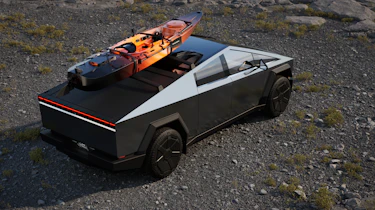
The Cybertruck was designed to be truly capable off-road. Ground clearance of up to 17 inches was double that of a Ford F-150 pick-up, with locking differentials, rear torque vectoring, variable steer-by-wire steering and rear-wheel steering all contributing to its off-road ability – Tesla even claimed that the latter gave it a better turning circle than a Model S. The marque also said the low centre of gravity – a virtue of its skateboard-style battery placement – helps traction, another significant factor in towing, with Musk claiming ‘it won’t roll over’ as a result.
While short of the 1600kg initially projected, its load bed was rated to carry up to 1000kg, with a sliding tonneau cover offering up to 67 cubic feet of lockable storage. Both all-wheel drive variants were rated to tow up to 5000kg, with the rear-drive rated for slightly less at 3400kg – for comparison, the all-electric F-150 Lightning can tow up to 4535kg.
As a rather unique solution to range anxiety, Tesla also offered an optional range extender in the form of a bed-mounted battery pack, offering an additional 130 and 120 miles in the all-wheel drive and Cyberbeast range-topper respectively.
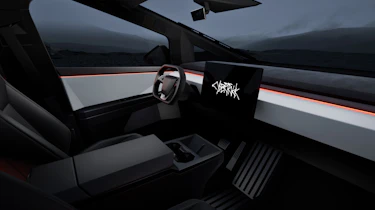
Inside, the design reflects the exterior with a basic, angular aesthetic. As in the rest of the Tesla range, a large central infotainment display acts as a control hub for virtually everything on the vehicle, only now increased to 18.5 inches in size as opposed to 17 in the Model S. Rear passengers also receive a 9.4-inch touchscreen for entertainment, fast 65W USB-C charging and even 120V/240V outlets throughout. The Cybertruck can even provide up to 11.5KW of power to anything from another vehicle to a house.
> Tesla Model S Plaid 2023 review
Final pricing was quite some way from what Tesla initially projected, with the entry-level rear-wheel drive was $60,990 but dropped soon after production began, with the all-wheel drive from $79,990 and the triple-motor Cyberbeast from $99,990. Those were increases of over $20,000 for the entry-level car and $30,000 for the range-topper.
UK buyers could place a £100 deposit to secure their place in the queue from the initial reveal in 2019. On the reveal of the production car, that option disappeared from the site. There’s since been no word on whether the Cybertruck would make it to Europe or the UK but many have speculated that it would never happen due to safety regulations. It certainly won’t happen now, save for private imports. Whether the depositors ever got their money back? Well, we’d love to hear from you…
Tesla Cybertruck specs
| Cyberbeast | All-wheel drive | Rear-wheel drive | |
|---|---|---|---|
| Powertrain | Triple motor | Dual motor | Single motor |
| Power | 845bhp | 600bhp | TBC |
| Top speed | 130mph | 112mph | 112mph |
| 0-60mph | 2.6sec (rollout subtracted) | 4.1sec | 6.5sec |
| Drive | All-wheel drive | All-wheel drive | Rear-wheel drive |
| Weight | 3104kg | 2995kg | TBC |
| Power-to-weight | 272bhp/ton | 200bhp/ton | TBC |
| Range (est.) | 320 - 440 miles* | 340 - 470 miles* | 250 miles |
| Towing capacity | 5000kg | 5000kg | 3400kg |
| Price | $99,990 (est) | $79,990 (est) | $60,990 (est) |
*range with range extender