Polestar Formula 2030 concept previews future Tesla rivals
The new Polestar concept adds curves into the mix of scandinavian minimalism, and brings back physical controls inside

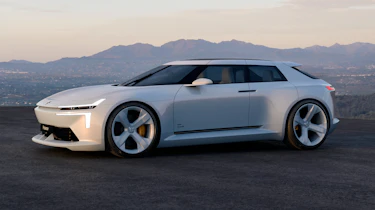
Polestar’s next generation of cars, charged with ramping up sales volumes and therefore profits, are just over the horizon. A next-generation replacement for the now-discontinued Polestar 2 saloon, as well as a new Polestar 7 small SUV, will be on sale before the decade is out to take on Tesla’s Model 3 and Model Y, as well as BMW’s i3. Ahead of their reveals, a new Concept previews what to expect in terms of design and technology, as well as the brand’s evolving philosophies. This is the Formula 2030 Concept.
Formula 2030, while not set for production, is the vision of new design head Philipp Romers of what Polestar would make if it could only sell one car. It also borrows its name from Polestar’s Formula 2030 strategy, to which the new saloon and SUV are central, and is described as a ‘physical manifestation’ of this plan.
Polestar Formula 2030 Concept – design
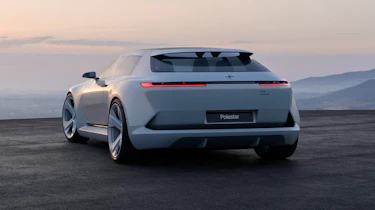
Described by Polestar as a ‘practical four-door sports car’, the bold design of the Formula 2030 does scream one-car solution, melding estate, hatchback and coupe form factors into one sleek yet stealthily practical whole. In silhouette, it’s not far off Porsche’s Sport Turismo sloped-back estate models. As our first indication of where Romers will take Polestar design, we can immediately conclude that current harder-edged design language is to be rounded off a bit with softer lines and more organic surfacing.
One of Polestar’s biggest design wins has been the cohesion of its existing language and how head-turning the cars are, importantly, to those who don’t know what a Polestar is. Happily Formula 2030 retains plenty of recognisable Polestar traits – the twin-blade lights a development of the distinctive set-ups seen on today’s Polestar 4 and 5. There’s a bit of Koenigsegg in the pillarless, almost wrap-around windscreen, only punctuated by the prominent central windscreen wiper. Unlikely surely, to see production on the Polestar 2 and 7.
There are large front doors and almost vestigial, rear-opening doors off the back of them. A full panoramic glass roof almost slips down into the rear hatch, with a band of body-colour wrapping around the top in the form of a spoiler. The rear is the least recognisable as a Polestar, with a rotund rump fed by voluminous haunches and punctuated by slim individual blade-like lights, the Formula 2030 dispensing with width-spanning light bars. There’s more than a whiff of Porsche here and even a bit of BMW Z8. The 22-inch chunky four-spoke wheels, by contrast to Polestar’s usual futuristic flavours, have almost ‘90s vibes.
Open the boot and there’s a slatted load bed not unlike the load space in a Ferrari GT car, with straps for your luggage. Open the ‘frunk’ and you see two helmets, a fire extinguisher and lovely inboard Ohlins dampers with manual adjusters, a neat callback to the Polestar 1 and Polestar 2 BST.
Polestar Formula 2030 Concept interior – the return of physical controls
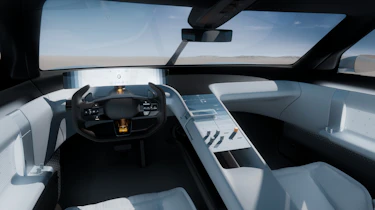
Look past the yoke shape of the steering wheel, the crisp bezel-less deployable infotainment screen and vast driver’s display and the big news is that physical controls make a confident return here, with the brand ‘committing to rebalance the mix of physical and digital’.

There’s no changeable hotkeys – a loathsome solution in current Polestar models – to be seen on the new wheel, with dedicated buttons instead. The central tunnel meanwhile resembles more a high-quality hi-fi system, with crisp knobs and toggles for the media, climate controls and even the powertrain settings. You can also rearrange these physical controls to a layout of your liking, as they’re switchable and modular. Above, the screen features a futuristic development of Polestar’s Google-based minimalist tiled user interface.
The screen itself can also fold upwards when the physical sliding drive select control is on ‘Normal’ or ‘Autonomous’ mode. Likewise, when in Autonomous, the wheel and driver’s display retreat to afford the driver, now no longer driving, some more space. The colours and materials featured are all typical Polestar, with a focus on sustainability – the seats like in the Polestar 5 feature flax fibre backs – and plenty of white, with smatterings of yellow for the harness-like seat belts.
What it means for the Polestar 2 and Polestar 7
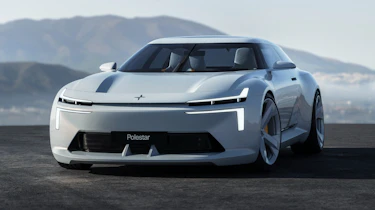
The underpinnings of the Formula 2030 are unknown and as this is a fictitious car that will not make production, they’re not particularly important. For reference, its 4680mm length and 2780mm wheelbase are very similar to those of the outgoing Polestar 2 saloon, though it is wider and shorter.
What does the concept tell us about the next Polestar 2 and the Polestar 7? Well, hopefully that they will continue this move back towards a mix of tactile physical and intuitive digital controls. Take the nose of the Formula 2030, make it slimmer and taller and you’ve basically got what the new 2 will look like, too, if Polestar’s own teasers are to be believed. Which suggests it’ll be every bit the minimalist slice of Scandi-cool you’d hope for but then, we expected that. What it needs is battery, powertrain and chassis tech, and driving dynamics to rival BMW’s brilliant new i3.
And they need to sell in the volumes required to make Polestar a viable business. The new Polestar 5, as the near-£100,000 flagship, was never the car for that job, playing instead the role of halo model. The Polestar 4 has done good work in terms of volumes, in spite of its flaws, and the company has worked on efficiencies to reduce its losses by 43 per cent in H1 2026. Of course, ‘reducing losses’ is still a long way from making a profit. For that, the onus will be on the new Polestar 2 and 7 to start making waves in the sales charts.