Driving the Analogue Automotie VHPK, a Lotus Elise with McLaren F1 flavour – car pictures of the week
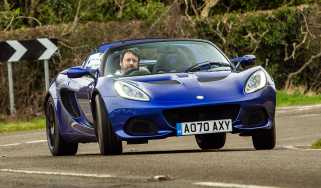
How to make a Lotus Elise even more driver-focused? Bin the passenger seat and mount the driver in the middle

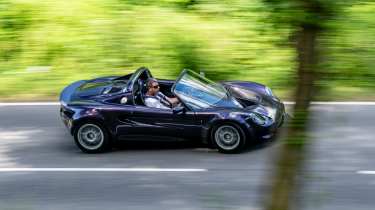
What would you transmute from the 1990s hypercar icon that is the McLaren F1, to the plucky and no less impressive (in terms of engineering) 1990s icon that is the Lotus Elise? An easy answer would be the BMW M V12, though packaging would be an issue. Analogue Automotive decided to borrow one of the McLaren’s defining features, its central seat, as an upgrade for the Elise. Meet the Analogue Automotie VHPK that we’ve been driving in issue 349 of evo. These are our favourite shots from the test.
It could be argued that the Elise didn’t need intensifying but a lot about the VHPK is tantalising. Beyond the central driving position, it gets a 250bhp version of the K-Series engine, with the name a play on Rover’s VHPD (Very High Performance Derivative) acronym for the racy 190bhp version developed in the 1990s.
The car also weighs just 600kg (albeit without fluids) which is an astonishing achievement, given a standard Elise is hardly carrying much excess weight, at under 800kg. This is the very best sort of restomod: one that preserves and amplifies everything we love about the original. To read the full feature, pick up a copy of issue 349 from the news stand, or from our online shop.
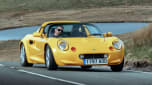
‘If the engine and central driving position are the attention-grabbing aspects of the VHPK, it’s the impressively reduced weight that permeates the driving experience most completely. It has a fabulous freeness and almost complete lack of inertia that’s magical whether you’re punching through the lower gears or flexing between corners in fourth or fifth. And braking is equally free from the effects of unwanted mass.
‘The carbon brakes have tremendous stopping power, but perhaps against expectations, rather than threatening to lock the front wheels like an F1 car the VHPK has a firm, feelsome pedal and progressive modulation that means you can work right up to the limit of grip with the tyres chirruping at the brink of lock-up.’ – Richard Meaden, evo editor-at-large, evo 349.