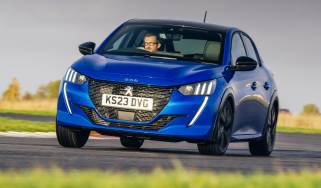
Peugeot’s new petrol engine swaps belts for chains to improve reliability
New engine isn’t performance-oriented but does address some reliability issues around so-called ‘wet belts’, swapping them out altogether for chains

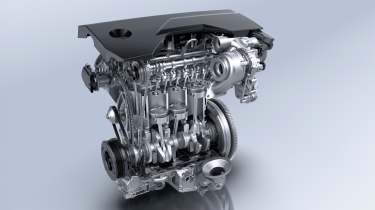
What seemed like an impossibility before all the recent electrification course corrections is now a reality: Stellantis has revealed a new petrol engine. Called the ‘Turbo 100’, it’s a small three-cylinder turbocharged engine destined for first use in the Peugeot 208 hatchback and Peugeot 2008 crossover.
The engine is described as ‘designed to extend driving pleasure’, though to be clear, we’re not looking at a new GTI engine here. Rather, it’s a development of the existing 1.2-litre Puretech that’s currently available in 99bhp form.

The new 1199cc engine is good for an identical 99bhp but according to Peugeot, incorporates 70 per cent new components, to an end of improving reliability and efficiency. Its new variable-geometry turbocharger also aims to improve low-end response. Peugeot says it’ll be better around town and respond more keenly when overtaking, though its identical 151lb ft arrives at the same 1750rpm as the outgoing engine.
The main change is the move from a rubber timing belt to a metal timing chain, yielding ‘increased reliability’. Revisions to the engine block, pistons and piston rings also contribute to increased robustness.
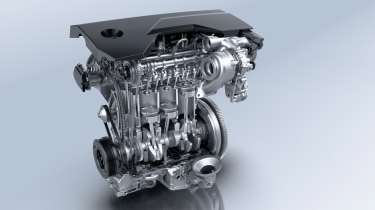
Stellantis highlights the rigorous testing regime the engine underwent in order to test the engine’s durability – 30,000 hours on test benches and 3 million kilometres of testing in prototypes, with individual engines surpassing 200,000km in some cases.
As much isn’t stated but the switch to a chain versus a belt addresses the premature degradation issues faced by current ‘wet belt’ engines, which run the timing belt through the oil. The existing engines require very diligent servicing with the right oil to avoid the belts breaking down prematurely and damaging the engine. The new engine will need less maintenance, with intervals of every two years or every 25,000 miles with an annual interim check, reduced from every year or 20,000km.
A further major change to an end of improving efficiency is the new high-pressure fuel injection system that runs at 350 bar. There’s also revised valve timing to reduce friction, new pistons and a higher compression ratio, with the engine optimised to run on the Miller cycle.