Alfa Romeo Stelvio Quadrifoglio long-term test – living with Alfa's 513bhp winter weapon
Driver coaching puts the Alfa and its keeper to the test, and reveals why sports cars still have the edge
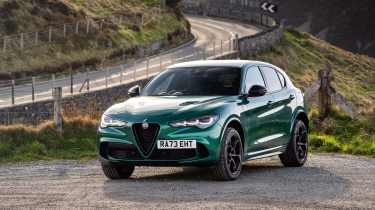
Anyone who enjoys driving wants to be the very best we can when behind the wheel. But when was the last time you had your driving assessed and was given any tuition as to how to be a better driver? Like me, when you took your driving lessons I guess.
With the amount of driving I do for work the Stelvio joined me for a two-day course with Paul Ripley and his High Performance Driver Coaching team. It was an ideal opportunity to explore more of the Alfa’s character while I put into practice some of the methods from Paul’s ‘evo Standard’ driver training. The focus wasn’t on outright speed, but on refining technique: better observation, smoother inputs, building consistency behind the wheel.
On the initial road section, the Alfa felt a little stiffer than usual. At first we thought North Yorkshire had some unusually poor road surfaces, but the unsettled, jittery feeling lingered, so we gave the car a once-over. The tyres were quite worn but still legal. More concerning was that all four were set to 44 psi, which is well above the recommended pressure. The car had its 10,000-mile service (covered under a £399 three-year service plan) just before the course, so they must have been erroneously over-inflated there.
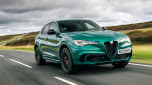
With the pressures corrected, the Stelvio felt back to normal again and the course could continue unhindered. The clearer view ahead afforded by the Alfa’s raised driving position made for easier hazard perception, which was something Paul’s senior instructors Ian Halton and Richard Bott placed real emphasis on. It was a reminder that driver confidence often begins with vision, not grip or power.
The track element of the course allowed the Stelvio to stretch its legs a little more. One exercise involved braking from 70mph to a standstill, the aim being to time your braking input – applying maximum effort immediately and throughout – so that you stop at a specified point. It’s devilishly difficult to get right and a genuine eye-opener to real-world stopping distances. It also illustrated how effective the Quadrifoglio’s brakes are, even though our car doesn’t have the optional carbon-ceramics. This test was followed by a slalom tackled at various speeds, which revealed just how quickly this quite large SUV can change direction when asked.
Everything is relative, of course. We also had our Boxster GTS present (this was prior to its recent bump), and it ably demonstrated the advantages of a true sports car. Manual, mid-engined and much lower than the Alfa, it delivered a beautifully balanced drive and set a high benchmark for clarity and feedback. Then again, the Stelvio’s more demanding nature gave it a different kind of appeal. You have to work harder with it, but when you do, it rewards you for it. It’s a car that improves your driving, simply because it doesn’t flatter bad habits.
Since the course, a fresh set of Pirelli P Zeros has transformed the Alfa’s behaviour. Stability has improved significantly, particularly in fast, sweeping corners, and the whole car feels more settled and precise. Ride quality, though, remains a compromise. Even in the softest damper setting, the Stelvio is still firm, surface imperfections making themselves known, and over longer distances it can start to wear a little thin. It’s all part of the Quadrifoglio’s focused nature, but there are times when a bit more compliance wouldn’t go amiss.
Still, the Stelvio continues to feel special. It’s flawed, no question, but never boring. Rivals may offer more comfort and a more modern infotainment set-up, but few, if any, can match the Alfa’s sense of theatre and involvement.
| Total mileage | 11,684 |
| Mileage this month | 1676 |
| Costs this month | £1251 (tyres) |
| mpg this month | 22.0 |
This story was first featured in evo issue 334.