Fiat Abarth: Abarth gets a sting in its tail
Scorpion badge’s reinvention continues with 500 Abarth and promise of standalone sports cars

Steve Norman, the British-born global marketing director of Fiat, is talking about Abarth, the sports and competition car company founded by Carlo Abarth back in 1949 out of the wreckage of the Cisitalia racing operation and which, since coming under the ownership of Fiat in 1971, has been variously flagship competition arm, neglected, under-exploited or downright abused (few think of the Stilo Abarth without a shudder).
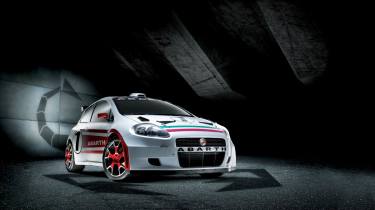
The disclosure that there will be a truly distinctive Abarth version of the new 500 follows on from the success of a 266bhp Grande Punto Abarth in its debut season in the European Rally Championship last year and coincides with the development of more race and rally Grande Puntos at Abarth’s Corso Marche premises in Turin and the pending arrival of 153 and 178bhp road-going models.
They reflect the already-made-clear intention of Luca De Meo, Fiat’s fiery young chief executive, that Abarth should operate with greater independence from the rest of Fiat, restoring its competition credentials and generally coming to stand for more than the wishy-washy badge engineering of the recent past. What has yet to be made fully apparent, however, is just how extensive are De Meo’s plans for an offshoot that has the potential, with determination and a focused effort, to become another performance brand for Fiat as distinctive in its own way as Alfa Romeo or Maserati.
Many tend to forget what Abarth symbolised during its days of independence. Certainly, German-born Carlo had the sense to realise that motor racing is one of the world’s most volatile activities and even before the Fiat takeover had built up a business making high-performance exhausts and similar equipment for outside customers to see Abarth through motorsport’s peaks and troughs. That remains part of Abarth’s function today.
But he also designed and made cars in Abarth’s own right, and they were some of the more desirable of the ’50s and ’60s: all small, all swift, all spectacularly styled and many of them race winners. Among the more memorable stand the Coupe Scorpione and 205A Berlinetta GT.
There have been a few brave stabs at distinctive Abarth models under Fiat ownership, including the delightful little 850 TC Coupe and the World Rally Championship-winning Fiat 124 Abarth. Like the new Grande Punto and 500 Abarth models, however, they were modified cars based on bodies with only minor cosmetic changes. Steve Norman refuses to be specific, but indicates that Abarth is poised to take the next step beyond: Abarth two-seaters, first potentially on a modified 500 platform, but with all options open after that.
That there could be room within Fiat group’s marque line-up for small, more Lotus-like coupes and roadsters easily demarcated from Alfa Romeo is not in doubt. But given Fiat’s not-so-distant brushes with financial disaster, isn’t this all pie in the Turin sky?
Two main elements give such a strategy credibility. One is the spectacular turnaround achieved by Fiat group chief executive Sergio Marchionne in less than three years; Fiat is now firmly back in profit, even before the cash starts flowing from the new Bravo mainstream hatchback and the 500. The other is the manner in which Fiat is now developing its new cars.
Both Bravo and 500 have gone from first screen concept to production in little more than 18 months. Fiat has gone for broke in deciding to style, design, engineer and test almost wholly virtually, with very little investment in building hard metal prototypes. To many it has appeared a risky strategy, but it seems to have paid off. Both Bravo and 500 are well built and ride and handle competently.
With Fiat’s renowned flexible manufacturing expertise and the virtual engineering approach, the cost of distinctive Abarth models would come down mainly to the investment needed for tooling.
Given Fiat’s history of the past two decades, during which it has been demoted to an also-ran manufacturer in Europe outside of Italy, Norman is at pains not to get too carried away about prospects for the Fiat group’s future: ‘We must no longer over-promise and under-deliver.’ Even allowing for that, he suggests, an Abarth reborn with serious sting is by no means as far-fetched as it might sound.