Supercar concepts of the 1990s that you forgot
Concept supercars of the 1990s weren’t just dream machines; they previewed tomorrow’s technology, design and ambition – with wildly varying success
Supercar concepts used to be about style more than substance. As long as the saucy wedge on the show stand could make people say ‘wow’, the job was done. But by the 1990s supercar concepts were also about technology, some accurately predicting what was to come, some a little more theoretical.
This was perfectly encapsulated by one of the decade’s first low-slung concepts, the Chevrolet CERV III of 1990. A more fully realised version of the Corvette Indy mentioned on this page last month, the CERV III had a wider and longer shell so it could accommodate actual humans, while its active suspension and four-wheel steering were now realistically operational thanks to some hard work at Lotus. Yet despite GM sending a lot of cheques to Hethel, the CERV III remained a one-off tech tester.
Showcasing tech was also the object of the Mercedes-Benz C112, first shown at the 1991 Frankfurt show. Where the C111 series from the 1970s has been predominantly about powertrains, the C112, running a production-spec 6-litre V12, majored on active chassis and aero, alongside near-future tech including radar cruise control. With its neat interior and sensible provision for door mirrors and number plates it looked ready to enter production, but economic downturns and the sting from the poorly received W140 S-class meant the C112 was never more than a tantalising tease.
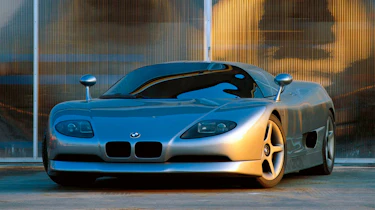
In fact, 1991 was the year of teasing from the car makers of Germany, because BMW also flirted with supercars, fetching up to the ’91 Geneva show with the Nazca M12, its design inspired by Group C racers and credited to Giorgetto Giugiaro’s son, Fabrizio. Its doors were gullwing for the top half, normally hinged for the bottom, its engine was the M70 V12 from the 850i, and its body made largely from carbonfibre for a claimed kerb weight of 1100kg. Later the same year there would be a racier version, the Nazca C2, with an Alpina V12 in the middle, and in 1993 a Spider iteration for good measure, but all remained strangers to the showroom.
Audi was also dangling carrots in the early ’90s, starting with the Quattro Spyder of 1991, a mid-engined, aluminium-bodied two-seater that looked production feasible, though its 2.8-litre V6 would have made it more sports car than supercar. Just a month after the Spyder was shown in Frankfurt, Audi used the Tokyo show to reveal a true supercar, the stunning Avus concept with its radically cab-forward shape, polished aluminium skin and a 6-litre, 502bhp W12 in the middle. Though in truth the muscular-looking engine beneath the rear glass was a mock-up made of plastic and wood.
But the Avus wouldn’t be the only ’90s concept to use that unusual W-shaped cylinder layout, first sketched out by VAG overlord Ferdinand Piëch during a train journey across Japan. The Volkswagen W12 was, as its name suggested, another recipient, first shown at the 1997 Tokyo show. At the time, rumours said a production version was in the works, only for VW Group to go on a mad spending spree the following year during which it bagged Bentley, Lamborghini and Bugatti, all of whom would make a more convincing case for selling a supercar. The concept with the lowly VW badge on its nose would serve its time as an endurance record setter and test hack for the W12 engine itself.
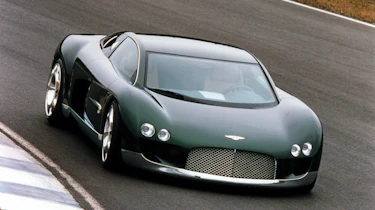
In 1999 that engine was back, now in the Bentley Hunaudières, expanded to 8 litres to make a claimed 624bhp and mounted on a Lamborghini Diablo chassis skinned in aluminium and carbon. Years before the Continental GT, the Hunaudières was the perfect way to show that Bentley had a more dynamic future under VAG. It might have made production if Piëch hadn’t decided that making a W-motor, mid-engined corporate flagship was a job for Bugatti.
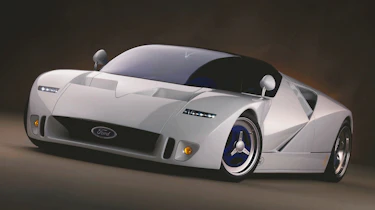
The defining supercar concept of the 1990s, however, came not from VW Group but out of Ford in Detroit. With the GT40 a distant memory, Ford’s ’90s output rested heavily on mass-market machinery. The new Mondeo may have been warmly received, but the company’s designers knew their cars must look bolder, so were quietly working towards the distinctive New Edge design language that would define the original Ka and Focus. But those cars were years away.
They needed a faster way to show that bold design was coming, and a supercar concept was it. At the time, Ford-owned Jaguar was struggling to offload XJ220s, so the Detroit mothership had one shipped over and dismembered for its chassis, which was lengthened to accommodate an experimental 5.9-litre V12. For good measure, it was fitted with four turbos to give a headline power output of 720bhp, though this was theoretical, since the basic engine worked but the blowers were just for show.
The GT90 was a sensation when it was revealed at the Detroit show in January 1995, and the fervour around the car only heightened when Ford management hinted at production possibilities. Sadly, since these would involve cutting up more XJ220s or developing a new chassis from scratch, the numbers didn’t add up. But the GT90 did its job, giving advanced notice about the look of future Fords. While so many ’90s supercar concepts were about tech, it was nice to find one that was there just to make people say ‘wow’.