Electric car home chargers explained: how to run an EV the cheap way
Charging from home can make a 900bhp Lotus as cheap to run as a family hatch. Here’s our guide on how to get started

If there’s one thing everyone can all agree on, it’s that EVs are cheaper to run than combustion-powered counterparts. Here’s our guide on how to make the most of those savings with a home charger
It’s taken some time, but electric cars have infiltrated every corner of the automotive market, with everything from city cars to multi-million pound hypercars powered by nothing but electrons. In today’s climate of ever-increasing fuel costs, many are making the switch to electric for the inherent cost savings, but one thing is key to making the most of them: a home charger. Here’s everything you need to know.
> Best electric cars – these EVs deserve the attention of car enthusiasts
The types of home chargers
- 7.4kw output is the industry standard
- Lower outputs are available for limited power supplies
- A 22kw output is possible, but only on three-phase power
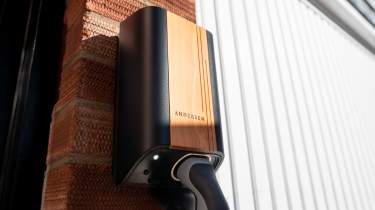
All the way from high-end, premium chargers from brands such as Andersen (pictured) to cheaper options often supplied through your energy provider or as part of a deal with car manufacturers, you’ll typically receive the same power output of 7.4kw providing your home has a 32-amp circuit – this means your car will charge at the same speed, regardless of the charger you choose. Expect to pay from £100 - £700 for a 7.4kw charger before fitting costs and incentives.
While they won’t speed up charging, the benefits of more premium chargers can instead be found in usability features, with in-app cost tracking, remote stop/start, improved surge protection and, of course, a neater design to suit your home – some, such as Andersen, can even be customised from the factory. Chargers are also available in tethered and untethered forms, meaning you’ll have an integrated Type 2 cable in the former and need to supply one for the latter, plugging it in for each use. A typical Type 2 charging cable costs around £100.
On homes with more limited 16-amp power supplies, output can be limited to 3.6kw, taking around twice the time to charge a vehicle to the same level as a 7.4kw charger. There's also the option of a 2.3kw 'granny' charger which simply plugs directly into a three-pin wall socket – this is typically used as a temporary solution or in scenarios when a permanent charger can't be installed. The cost for these ranges from £100-300 depending on the manufacturer.
At the other end of the scale, those with access to a three-phase supply (usually associated with commercial premises) unlock the ability to charge at up to 22kw AC. It's worth considering, though, that the vast majority of EVs sold don't support this charging speed on an AC supply, so it's worth checking before forking out.
Which connector type do you need?
- All new EVs use Type 2 connectors for home charging
- CCS2 port is used exclusively for high-speed public charging
- Older EVs use outdated or proprietary connectors
In the infancy of EV technology, manufacturers used a variety of connectors for a variety of purposes, making it a minefield for newcomers. Thankfully those days are long gone, with every new electric car sold in the UK coming with the same port.
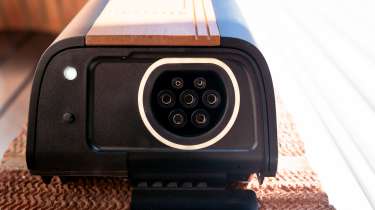
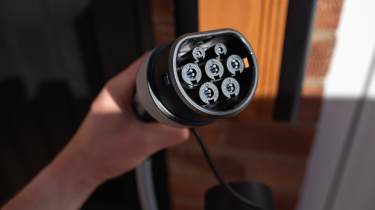
Open the charge port on any EV produced in the last few years and you'll see a ‘Type 2’ port with seven pins. This is the port you'll use to connect your home charger, or any other AC supply, supporting up to 22kw. Most cars (and homes) will only support up to 7.4kw, but combine three-phase power with a compatible car and you can accept more.
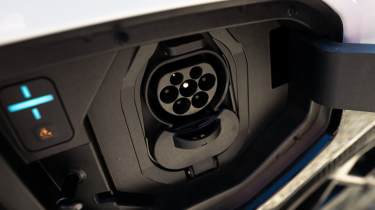
Beneath the Type 2 port, you'll typically find a secondary cover over an additional two pins. This is the second half of what becomes the CCS2 port for high-speed DC charging. You'll only use this for public charging.
Should you purchase an older EV such as a Nissan Leaf or a Tesla built before 2020, you will come across alternative charging ports. You can purchase cables and adapters specific to these models to allow for both home and public fast charging, but these can come at a cost – in the Nissan's case, a CCS2 to CHAdeMO adapter will cost you in excess of £500.
Installing a home charger
- Fuse board age & incoming supply can alter ease of installation
- Home chargers are best suited to private driveways…
- …but there are options for those parking kerbside
Installing an EV charger at home is strictly for certified electricians and varies significantly in cost depending on the age of your fuse board, power supply and supporting hardware. As a result, you can expect a pre-installation visit to assess the nature of the installation and provide an accurate quote.
The biggest obstacle to home charging and EV adoption as a whole is whether or not it’s practical to charge an EV at a given property. Where you park the EV in question relative to the charger’s planned installation point is significant, as cables can quickly become trip hazards even if you’re able to park on a driveway.
For those unable to park on a driveway but have access to kerbside parking, you’re not completely out of luck. Providing you can reliably park opposite your property, companies such as Kerbo can now install discrete cable channels through the pavement, eliminating the trip hazard and allowing you to charge your car at home with ease.
The benefits of charging at home
You'll pay significantly less per mile to travel in an EV than an equivalent combustion-powered car. Energy prices fluctuate wildly, so providing exact cost estimates is impossible, but at the time of writing, the (highly inefficient) near-900bhp all-electric Lotus Emeya costs over 4 times less per mile to run than a V8-powered c25mpg petrol equivalent.
When a home charger becomes even more desirable is when you look at the cost of public charging. While it's quick and convenient in a pinch, cost per kWh nearing £1 means an EV can soon cost more to run than a combustion-powered equivalent. This is not the case when charging at home.
Should I be on an EV energy tariff?
EV-specific energy tariffs are now offered through numerous energy suppliers, allowing you to make use of a cheaper energy rate for a fixed time period (often at night or at weekends) to charge your car for less. This is a great option for those who regularly charge at home, but there are some things to consider.
While an EV tariff will give you cheaper rates at night, they typically come with higher standing charges. Charge enough at night and the cost benefit will soon outweigh this increase, but those charging infrequently could find themselves paying more on an EV tariff as a result.