Range Rover Electric review – why we’d have the EV550 over a V8
In taking its time Range Rover has produced an EV that adds capability and appeal compared to its combustion counterparts

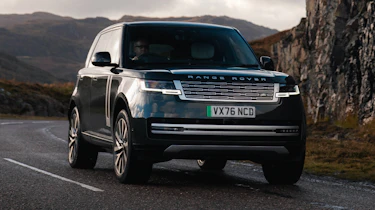
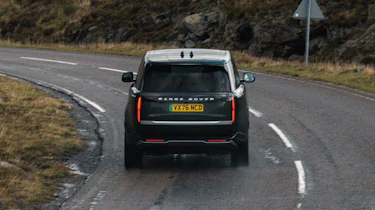
That Range Rover has decided that the all-new electric derivative of its SUV icon should look exactly like its internal combustion engined relatives might come as a surprise to some. They have also decided against fitting rocket thrusters. I know, how do they expect to sell a car if they’ve given the internet nothing to get its teeth sunk into? Well, JLR’s hope is that by keeping its own rule book very much intact, that customers will consider the £154,070 Range Rover EV550 on its merits and not gimmickry. And it has plenty of the former.
If you think JLR’s latest edition of its pioneering SUV is a response to the wave of new high-end battery electric premium SUVs, you’re a little off the mark. A BEV version of the current L460 Range Rover was factored into the model mix a decade ago when the MLA-Flex chassis that underpins it was being developed; in this case to house a family of diesel and petrol combustion engines along with plug-in hybrid versions, and now a fully fledged electric model. Five years on from the car’s global debut, some of those diesel and petrol powertrain options have gone, most notably some of the petrol V8s, but this is one area Range Rover expects the EV550 to step in.
Power and performance
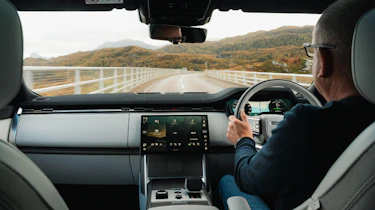
And for good reason, because it takes very little distance in its opulent cabin (few do interior design and materials in terms of quality and a sense of boutique bespokeness as well as Range Rover) to experience the effortless, peerless sensations a V8 Range Rover offers but with a powertrain that delivers seamless power and torque in near silence. Momentum is measured, delivered with the knowledge that if you need to, this near three-ton behemoth (RR claims a 2.8-ton kerbweight) can move at a serious rate. It’ll reach 60mph from a standstill in 4.3 seconds and top 124mph, which is both impressive and a little unnerving as it does so silently. Although it’s far more refined and less nauseous than many electric cars when doing so.
As with a V8-engined Range Rover the EV550 feels totally within itself, with more in reserve than you most often require. 542bhp might not grab the headlines like Mercedes-AMG’s new 1153bhp AMG GT SUV does. Then again, a circa-600bhp reduction feels a small penalty for a car that doesn’t look like it’s been designed in AI via a badly translated prompt meant for a children’s book illustration. Range Rover has never been about chasing numbers, preferring to take on the Bentley mantra of old in that its vehicles have ‘enough’ performance.
Should you live and die by numbers, the Range Rover Electric has 627lb ft of torque, a battery with a 118kWh capacity and there are two 260kWh electric drive units (EDUs), one to drive the front the axle the other the rear. Range is 372 miles on the WLTP cycle, with Range Rover claiming a real world figure of 330 miles, or a similar distance you can cover in a V8 engined Range Rover. Power and torque is also capped, with the peak numbers only available to you in Dynamic mode.
Because the MLA-Flex platform underpinning the Range Rover was designed to accommodate a battery for full EV application from the outset it slots between the two front axles and provides additional torsional rigidity as a result. The front EDU is positioned where the combustion engine normally lives and the rear EDU is where the rear differential and fuel tank would normally live. Although it does mean the long-wheelbase models can’t be specified with the seven-seat option. Less of an issue in Europe but a small one in North America where three-rows are as popular as Jaecoo 7s in the UK.
Ride and handling
In the process of electrifying the Range Rover, the air suspension has been upgraded to a twin-chamber system to reduce body pitch under acceleration and braking. It also manages body control better through both tighter, slower turns and maintains a higher level of precision and comfort at higher speeds. Whilst the chassis changes don’t eradicate the Range Rover waft, the car still moves with a suppleness and refinement few, if any, can compete with, it does reduce the ‘nodding head’ effect all SUVs suffer from, and one as tall as an RR can exaggerate.
On the roads of the Scottish Highlands that made up our test route there was no time when an equivalent ICE-powered model would have been preferable. If anything their gearboxes would be permanently changing to match the gradients and your speed adding a layer of unwanted interference eradicated by the fitment of an electric powertrain. It’s the smoothness of the car’s performance, how it rides and steers that keeps coming back to you. Yes it’s a cliche, but this feels a Range Rover first and foremost that happens to be electric-powered rather than a combustion car that’s been converted and compromised as a result.
Performance is plenty, think V8 quick, for single-carriageway overtakes and that instant torque makes quick manoeuvres a little less frantic when you’re asking something of a Range Rover’s size and weight to make a quick decision. It’s no Aston Martin DBX in this respect, but few things are. Then again, few things are like a Range Rover.
Off road
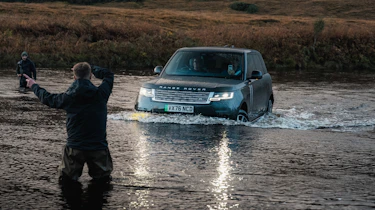
Off-road performance is, as you’d expect, as per every other Range Rover with a no compromise approach as to how it climbs the seemingly impossible, descends from great heights, covers every surface imaginable and fords rivers like a pro navigates an underground station in rush hour. With no low-range gearbox your right foot controls it all, but with the changes made to the throttle response depending on which off-road mode you have selected in the Terrain Response settings, you need to try pretty hard to get stuck.
Especially so as the car’s traction control software can react 100 times faster than the system fitted to the IC-engined models, reducing slip and attributing torque to where it is needed most much quicker. On its standard all-season Michelin tyres you’ll need to be a hardy explorer to reach them and the car’s limits.
Even before the engineers slung a battery under its floor, the current Range Rover has been the epitome of the luxury SUV sector, blending just enough performance with the highest levels of refinement. In creating an electric variant the Range Rover now offers a near-silent driving experience (though there’s more audible wind noise around the mirrors and tyre noise as to be expected) to further allow you to luxuriate in its peerless cabin layout at no expense to performance or dynamics when compared to a V8. Which makes you question, how much longer the BMW-engined petrol models (and indeed the Defender Octa) have in certain markets? It also means Bentley’s new Torcal is going to have its work cut out.
Downsides to the EV550? It’s still a big car carrying a lot of mass that needs your management regardless of the systems developed to aid you (there are over 300 new patents on the car). And despite range on par with a V8, those who enjoy the long-legged touring ability of a diesel will need to remember to stop considerably earlier and for longer, because only a 350kW fast charger will top the 118kW battery up from 10 to 80 per cent in 22 minutes. JLR has developed an app and payment card system that provides a one-stop charging account solution for owners.
For me, the single pedal driving didn't feel as intuitive or as smooth as the rest of the car either, the abruptness of the braking when coming out of the throttle causing a nautical shift and shunt through the cabin. That said, off-road it came into its own when negotiating steep climbs as it allows for a great balance between throttle application and momentum without the inconsistency of a combustion engine.
Price and rivals
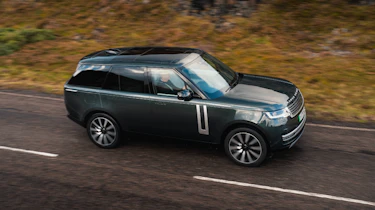
The new Range Rover Electric is available as a short or long wheelbase model starting at £154,070 for a short wheelbase EV550 Autobiography SV model with the First Edition and SV costing £157,610 and £176,230 respectively. The First Edition adds a fridge within the front centre armrest, the ability to turn the lower rear tailgate into a seat and an additional AC charging port.
The SV includes 22-inch wheels, Body and Soul seats with 24-way adjustment and hot stone massage function to accompany the heating and ventilating functionality. The £190,320 EV550 SV Black includes rear seat entertainment, SV leather trim, a sensory floor and body and soul rear seats.
If you require more leg room the SV long wheelbase starts £215,670, the Black at £225,240. And if you want to go truly bespoke, this starts with the Ultra models, which are POA regardless of wheelbase length.
In terms of rivals, there’s really only one: the Bentley Torcal, which has more power and performance and a higher starting price of £173,300.