Peugeot 408 GT review – a crossover coupe that you might not hate
Peugeot’s SUV-ified return to the repmobile space is appealing looking inside and out, if not the best-resolved mechanically or dynamically

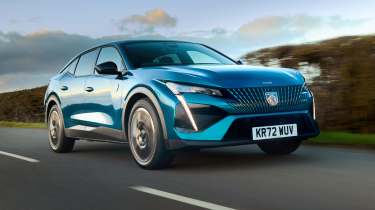
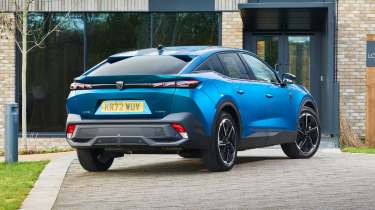
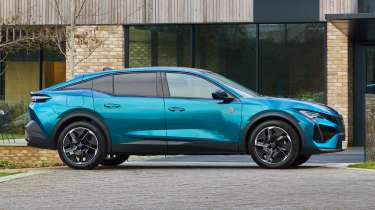
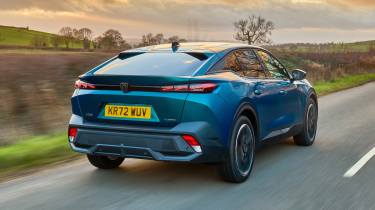
We never claim to be the arbiters of automotive design or taste – much more important is how a car drives – but the 408 (both in pre- and post-facelift form), to my eyes at least, might just be the first crossover coupe that doesn’t have me scrambling to find a spoon with which to scoop out my eyes.
People seem to like it too. What is a relatively conventional car in what used to be the D ‘repmobile’ segment, has people cricking their necks and asking questions, more so than some Porsche sports cars. ‘What is that car? I like it,’ someone asked (which admittedly poses questions about Peugeot's brand recognition), ‘Is that a Lamborghini Urus?’ asked another – I know, that far from supports my claim that it’s not just tolerable, but quite good to look at.
Either way, here is a relatively conventional family car, with pricing, powertrains, appointment and capability very much aimed at the average car buyer, that intrigues rather than anesthetises, at least in the first instance. But how about the way it drives?
Engines, gearbox and performance
- Petrol, hybrid and EV options
- Base petrol not the fastest, PHEV feels inconsistent
- Efficiency is decent across the range, EV good for c220 miles
Being a Peugeot and therefore a part of the Stellantis family, the 408 shares its architecture and powertrains with a number of models, including its smaller sibling the Peugeot 308, the Vauxhall Astra and Citroen’s C5 X. That architecture is the slightly older EMP2 platform, which predates the new-generation STLA small, medium and large platforms that Stellantis is moving forward with, that underpins the likes of the Citroen C5 Aircross and Peugeot 3008. It does nonetheless still support combustion, hybrid and electric versions.
It’s been around for a few years, with a recent facelift about to come on stream with lightly updated powertrains. Where before the range consisted of a 129bhp 1.2-litre petrol, PHEV hybrid models with 178bhp and 222bhp and an EV with 207bhp. Now the range has been rationalised, with the 1.2 now hybridised for 143bhp, the 1.6 PHEV buffed to 237bhp and the EV bumped to 211bhp. In the PHEV, electric range is up from 40 miles to 54 miles and the EV’s range bumps moderately to 283 miles, from 280 miles.
The range as it stands leaves a few questions to be answered, as there isn’t one perfect powertrain for the 408. The 1.2’s 129bhp and 170lb ft aren’t the most to be getting on with, even when a 408 weighs just 1392kg so-equipped. The new more powerful hybrid won’t improve the performance much either, shaving just 0.2sec off the 129bhp 1.2’s 10.4sec 0-62mph time. That said, in normal driving the petrol is at least economical, perfectly capable of delivering over 45mpg in normal driving.
The PHEV, while packing more performance (and the handy instant punch of a 109bhp electric motor) doesn’t integrate petrol and electric drive perfectly, especially where its e-EAT transmission is concerned. We found the seven-speed to not be the best at managing the powertrain and, when in manual, a bit sluggish and possessed of some strange habits. When in seventh and you pull the paddle for a gear that doesn’t exist, it doesn’t just ignore you, the car hiccups, like hitting a rev limiter almost, as if your paddle-pull has resulted in the car clutching out the powertrain.
Real world range isn’t great either – 20-25 miles on electric, though you might get more in warmer conditions. The PHEV doesn’t self-charge the quickest either and MPG takes a real hit. Even so, our 500 miles of running without plugging in once, yielded 40mpg overall. The PHEV is also much heavier (by c300kg) and that has dynamic ramifications I’ll discuss shortly.
The electric version? Well, range and powertrain tech are moving on quickly and the e408’s claimed 280-mile range (real-world, more like 200-225) are starting to look a little past it. The powertrain isn’t exactly high-tech either – charging speeds peak at 120kW (and that’s not set to rise with the facelift). All the same it’s perfectly pleasant to use, with power delivery nice and smooth, the throttle modulable rather than jumpy.
Ride and handling
- Petrol the lightest at 1395kg (but the new hybrid is heavier)
- Handles and brakes better for lightness and lack of hybridity
- Big wheels yield a choppy ride at times
The 408 uses a MacPherson Strut suspension set-up at the front, with a beam axle at the rear. Due to the widely varied weight specs across the powertrains, they all drive quite differently. The 1.2-litre petrol weighing just 1395kg (unfortunately, the new 1.2-litre hybrid’s weight is rising to over 1500kg) is the most natural-feeling to drive, the damping and anti-roll set-up tuned more nicely for the reduced mass it has to fight. It’s not perfect but is more composed than you’d expect of a slightly higher-riding car. The ride is decent too, though crashy at lower speeds on the larger wheels.
That’s not to say the plug-in hybrid is a lemon, but the fact it’s carrying an extra 300kg+ is obvious in the dynamics. It’s like driving around with three passengers constantly. While it’s not as controlled and doesn’t insulate you from the road’s imperfections as well as the standard car, it’s the powertrain itself – the lack of that last couple of tenths of cohesion between the electric and hybrid elements and the transmission – that most annoy when asking for brisk progress.
You notice inconsistency in the brakes too, moreso in normal driving than at speed, given big digs into the brake pedal use friction more than regeneration. In traffic however, there’s occasionally that runaway feeling in the handover from the regenerative element to the friction element for those last 10mph – all too familiar across a number of hybrids and EVs at a wide range of price points.
Interior and tech
- ‘i-cockpit’ divides opinion
- Design and material quality are decent…
- …as is space and practicality
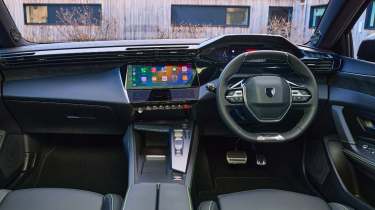
Peugeot’s interiors split opinion and have their pros and cons. If you’re a fan of the quirky i-cockpit set-up then it’s an aggregate win for the Peugeot, because the quality, material use and design punch above its price point. If i-cockpit isn’t your thing – many lament the hit-and-miss visibility of the driver’s display through or over the hexagonal wheel – then the ergonomics might put you off altogether.
I’m a rare fence-sitter with i-cockpit. The steering wheel feels nice and the mixed dial visibility isn’t the end of the world, though I understand some people’s dislike of it. The optional 3D display certainly feels like a gimmick but the ‘i-Toggle’ panel of customisable shortcut touch buttons is a good idea and the smartphone integration works well enough.
What’s feeling its age a bit is the interior tech – something that happens all too quickly nowadays given how quickly things are moving in an era of software-defined vehicles. The infotainment and driver’s screens feel a little apologetic, especially compared to the more modern set-up the 3008 received not long after the 408’s launch. The cabin tech isn’t being upgraded for the facelift much, either, though there are graphics upgrades for the 10-inch driver’s display
Being a crossover coupe, all-round visibility, rear leg and headroom aren’t what they could be but aren’t bad either – taller adults will feel their hair tickle the roof lining.
Prices and rivals
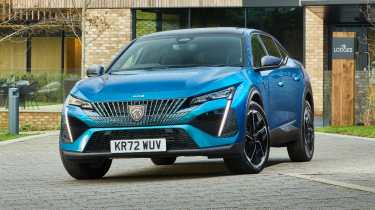
The 408 range is still separated by three trim levels, though for facelift spec those three trim levels are changing. Where it was Allure, Allure Premium and GT before, it’ll now be Allure, GT and GT Premium. On the pre-update car, GT spec was necessary to get the 408 in its sharpest-looking form, as well as the swish Alcantara interior trim. You get the sportier exterior in GT-spec now but the Alcantara cabin is now reserved for GT Premium spec, which also gets the £900 Focal premium hi-fi as standard. Prices range from between £29,495 for the basic Allure hybrid, up to £43,895 for a PHEV GT premium. In fact, as optioned, the latter is the only 408 to break the £40k barrier.
Indeed on price the 408 does well against rivals. Its powertrain lineup may be patchy but the premium look and feel and competitive price point stands it in good stead compared to say, a BMW X2 that you might consider instead, the starting price of which is just £5 over the most expensive 408, at £43,900 for the 168bhp sDrive20i. The Cupra Formentor is a sleek and sporty alternative but is still more expensive, starting from £35,315 for the 1.5 TSI, though it is still available with a manual. Consider also Audi’s Q3 sportback, which starts from £38,350 for the 1.5 TSI.