Ignore the critics, driving on track does improve your road craft
Skills honed on a closed course deliver a vital edge on the street, explains Paul Ripley
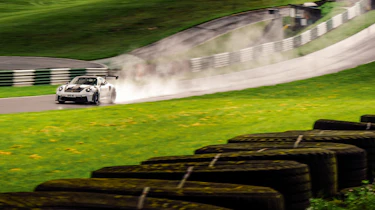
I always applaud people who want to drive better, people who want to expand their knowledge of driving and grow their skillset behind the wheel. As you continue down this route on your way to achieving the evo Standard, the search for new avenues of learning will inevitably lead you to consider experiences that take you away from the public road. This could mean spending time on a proving ground or taking part in a trackday. But can you really learn anything in these environments that will benefit you on the road – and which you couldn’t learn on the road in the first place? Absolutely!
Exploring the capabilities of both you and your car in such safe, controlled environments brings significant benefits, as it expands your knowledge boundaries and takes your overall framework of driving to the next level. You can improve your car control by gaining a greater understanding of balance, finesse and smoothness. You’ll have an enhanced appreciation for chassis dynamics and ‘car feel’ too, whilst becoming an expert in emergency evasion techniques. Such skills cannot be overestimated. They’re an essential part of high-performance driving, which is why many of the best drivers practise them regularly.
> How crashing a Lotus Cortina turned Paul Ripley into a driving guru
You’ll notice that evo often uses circuits for its testing. Of course, part of the reason for this is so the cars can be timed around a lap, measuring their ultimate ability to cover ground. But perhaps of greater value is that it allows the testers to extend their appreciation of a car’s dynamic responses by driving it to its limit of adhesion in a way that, for obvious reasons, could never be done on a road.
But if you’d never drive that quickly on the road anyway, what are the advantages of taking your car to a trackday or spending time on a proving ground? Because learning how your car performs in extremis can inform how to get the best from it at lower speeds on the road. Moreover, becoming more familiar with how your car – and you as the driver – react when the boundaries are being pushed can be invaluable should you find yourself in a situation on the road where you need to take urgent action to avoid an accident. You’ll be able to react more calmly and confidently, having experienced the sensations before and knowing exactly how much you can ask of your car.
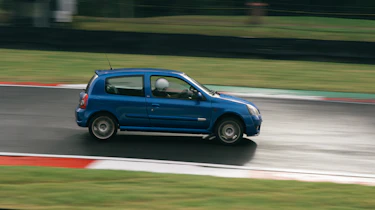
And then there are the skills you can use every day: heel and toe, sustained-revs gearchanging, fixed-input steering, braking modulation to affect chassis behaviour and balance, trail-braking into corners, smoother transitions when using the car’s controls, planning on approach to corners, understanding weight shift, balancing the moving mass and forces acting on the car… to name but a few. All of these are easier to learn on a circuit or proving ground, where you can find clear space to try them out (and make mistakes) without the distraction of other traffic and hazards. If you get time with an instructor too, this can help speed up the learning process
And if you love driving, such experiences are to be savoured. To be as one with your car, immersing yourself in safe yet exciting surroundings, can deliver some spectacular moments. You get to experience a freedom, a contentment and a magnificent fulfilment that is ultimately a rare thing in this day and age of containment and frustration behind the wheel. In some ways, this is driving at its finest. These experiences not only live long in the memory, but also help you to develop and improve skills and techniques that will last a lifetime.
This story was first featured in evo issue 343.