Lamborghini cancels electric car to focus on hybrids
The Lamborghini Lanzador will not make production as an EV, but plans for a hybridised fourth model are proceeding

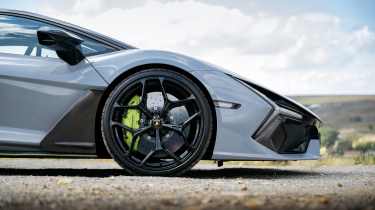
Lamborghini’s plans for an all-electric model are officially cancelled, the Italian brand has confirmed. It will instead double down on plug-in hybrid models that retain their combustion engines, including a fourth model in the range.
The fate of the electric car that was to be its fourth model, previewed by the 2023 Lanzador concept and initially intended to be electric, has been up in the air since last year. On the Lanzador’s reveal in August 2023, Lamborghini said it could be introduced as early as 2027, but it later said the car wouldn’t arrive before 2030.
It also fended off concerns about how it would instil a silent, engineless car with the believable character of a Lamborghini, the company’s recently departed CTO Rouven Mohr telling evo that ‘the thrills will be different for sure but they will not be less exciting’. These reassurances clearly didn’t convince potential customers, with whom Lamborghini has had a close dialogue over the last year when gauging appetite and judging whether to proceed.
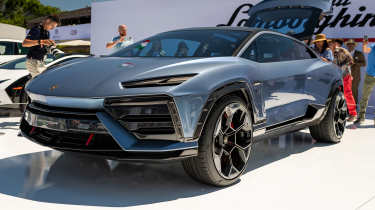
‘The original roadmap envisaged the introduction of a fully electric Urus by the end of the decade, followed by a fully electric fourth model line,’ the company said in a statement.
‘However, following extensive analysis and ongoing dialogue with dealers and customers, it became clear that the pace of adoption of pure BEV vehicles has slowed considerably, particularly within the luxury super sports segment, where demand remains very limited.’
Lamborghini’s plans: No EVs but more hybrids are coming

So, what is the plan? Well, Lamborghini has no intention of throttling back. Its hybridisation strategy has worked well, delivering cars in the Revuelto, Temerario and Urus SE that satisfy customers in terms of character and performance but also legislative pressures. It comes as no surprise that more of the same is the order of the day. Basically, the electric Lanzador is dead, long live the Lanzador PHEV and, indeed, a next-generation Urus PHEV.
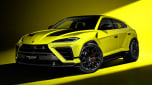
‘We have already announced that the next generation of Urus, scheduled for launch in 2029, will be introduced as a plug-in hybrid,’ the company has stated. ‘Similarly, the fourth model line will debut as a plug-in hybrid in its first generation.
‘Hybrid technology currently represents the most appropriate solution for the brand, combining meaningful CO₂ reduction with the emotional performance that defines Lamborghini DNA. While the product roadmap has evolved, the company’s commitment to decarbonisation remains unchanged. Investments continue at the Sant’Agata Bolognese plant, which is already carbon neutral, alongside ongoing optimisation of the supply chain and production processes, ensuring that sustainability progresses in parallel with performance.’
The Sant’Agatan marque did clarify that it was ready to develop and produce an electric car from a technological standpoint and that the cancellation was purely a reflection of market demand: ‘From a technological perspective, Lamborghini is fully prepared for full electric; however, market readiness within the segment is not yet aligned with this transition.’
The electric problem: What are Lamborghini’s rivals doing?
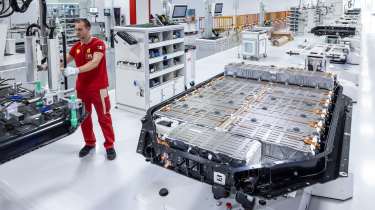
Lamborghini finds itself in a bold but fortuitous position. By hesitating to aggressively develop the technology underpinning the Lanzador, the brand avoided committing to a model before market demand was certain. Rivals have more invested and therefore the decision to cancel carries much higher stakes – as Porsche has found out, with its course correction causing a 99 per cent drop in operating profit for the first nine months of 2025. The cancellation of its electric 718 Cayman and Boxster models is all but confirmed.
Aston Martin first delayed its forthcoming electric car in 2024, from 2025 to 2026, before then pushing it to ‘the latter part’ of the decade, having confirmed it would focus on hybridsation in the short term. Given how the market has evolved over the last two years, more delays are likely and total cancellation a possibility.
Maserati too has stopped short of bringing its electric MC20 to market, killing it ahead of the introduction of the MCPura. Alfa Romeo also cancelled the electric version of its limited-run 33 Stradale and has delayed its next-generation Giulia and Stelvio in order to incorporate hybrid options.
Ferrari is powering ahead with the Luce, with Maranello’s first electric model set for a full reveal this year. It’s surely hoping customers will respond to what is set to be a statement vehicle, both in terms of technology and design. The rest of the market will be monitoring how it’s received closely and with great interest, but for the moment, Lamborghini has made the safe (and arguably sensible) call to not yet offer a direct riposte.