Ford’s Hypercar will use a roaring V8 to take on Ferrari once again
A 5.4-litre V8 derived from the heart of the Mustang will power Ford’s hopes of taking to the top step
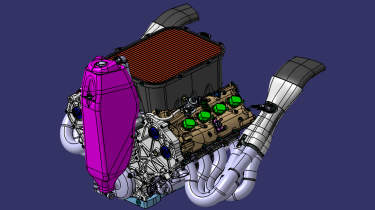
Ford is returning to the top flight of sports car racing in 2027 with a new LMDh Hypercar, and at the 2026 Ford Racing season launch in Detroit, which also saw Max Verstappen's new Red Bull RB22 revealed, we’ve been learning more about its engine, how it’s being developed and who’s going to be driving it ahead of its debut in 2027.
This is Ford’s first fully factory-developed and run programme targeting an overall win since the GT40’s era of dominance more than 60 years ago. The new LMDh Hypercar is being designed and developed by teams in Detroit and Concord, North Carolina and the best news? Cadillac won’t be the only team providing a roaring naturally aspirated V8 to bless the ears of spectators at Le Mans in 2027.
> Ford Mustang Dark Horse SC is Detroit's answer to the Porsche 911 GT3
Ford Racing's all-new LMDh endurance racer will use the 5.4-litre motorsport version of the Coyote V8 you can enjoy in company's Mustang specials such as the Mustang Dark Horse R and GT4 and GT3 racers.

It won't have escaped your notice that Ford Racing is also involved in developing Red Bull's new F1 powerunit and the Hypercar’s powertrain will, claim Ford, benefit from the partnership. The Dearborn team are ‘working hand-in-glove’ with Red Bull Ford Powertrains, not necessarily on a port ’n’ polish job for the V8, but on adapting it for hybridisation and working on the control systems to manage the mandatory stock hybrid system all LMDh cars have to run. Support from Red Bull is also coming back the other way to the WEC team, with F1 eexperience being handed down when it comes to refining pit stop strategy.
Other engine solutions were considered, including a heavily revised version of the EcoBoost V6 that powered Ford's last endurance racing, Le Mans class winner the GT GTE, but the naturally aspirated V8 was chosen for its simplicity and packaging advantages. As the development programme stands, first fire-up is scheduled for before the end of January as is the freeze on aerodynamic development. Ford Racing hopes to get the cars out testing in Q3 of 2026.

What relevance has it to road cars? Well, as Bill Ford insists: ‘We’ll be building V8s until it’s illegal,’ which is to say the Coyote isn’t the end. No doubt what is learned from developing and racing this higher-strung version of the motor will have a bearing on how the next generation of Ford’s road going V8 comes together.
Ford Racing is known to be utilising an Oreca chassis, which Alpine and Genesis are also using, as is Acura for the ARX-06 that only races in the US IMSA series. Why no IMSA for Ford? Head of the WEC programme Dan Sayers told us Le Mans is the number one target and that they need to ‘walk before they can run’.
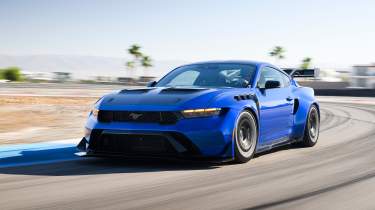
Ford’s interest in a return to top-level endurance racing has been long-speculated but downplayed, with even CEO Jim Farley saying that a prototype doesn’t have the essential relatability to the Ford road cars people can actually buy. This stance in part informed why Ford’s latest ‘supercar’, the Mustang GTD, is a Mustang and not a bespoke, low-slung mid-engined exotic as per the Ford GT.
In recent years though, with the popularity of the Hypercar class, that stance has changed. Ferrari taking its wins surely must have been like a red rag to a bull, making the opportunity to repeat history for both Farley and the Ford family too tempting to ignore. Nonetheless, the team are being encouraged to make the car look ‘as much like a Ford as possible’, though, Sayers insists, not at the expense of performance.
Ford has also confirmed who’ll be driving for ‘America’s Race Team’, as it refers to itself. Sebastian Priaulx, son of Andy Priaulx who campaigned the Ford GT GTE for four years at Le Mans, will be joined by ex-Porsche factory driver Mike Rockenfeller who have previous winning the Daytona 24 Hours and Le Mans in 2010. Both have most recently been campaigning Ford’s Mustang GT3, racking up two wins in IMSA in 2025, and will spend this year competing in the European Le Mans Series in LMP2 in preparation for their Hypercar upgrade.
They’ll also be joined by Logan Sargeant, who after a brief F1 stint will bring ‘a level of technical sophistication and high-downforce experience that is vital for a programme of this scale’. He’s also American, which is not insignificant when it comes to the optics of these things, Ford hoping to recreate the magic of Dan Gurney and AJ Foyt winning Le Mans in 1967 in the Ford GT MkIV.